
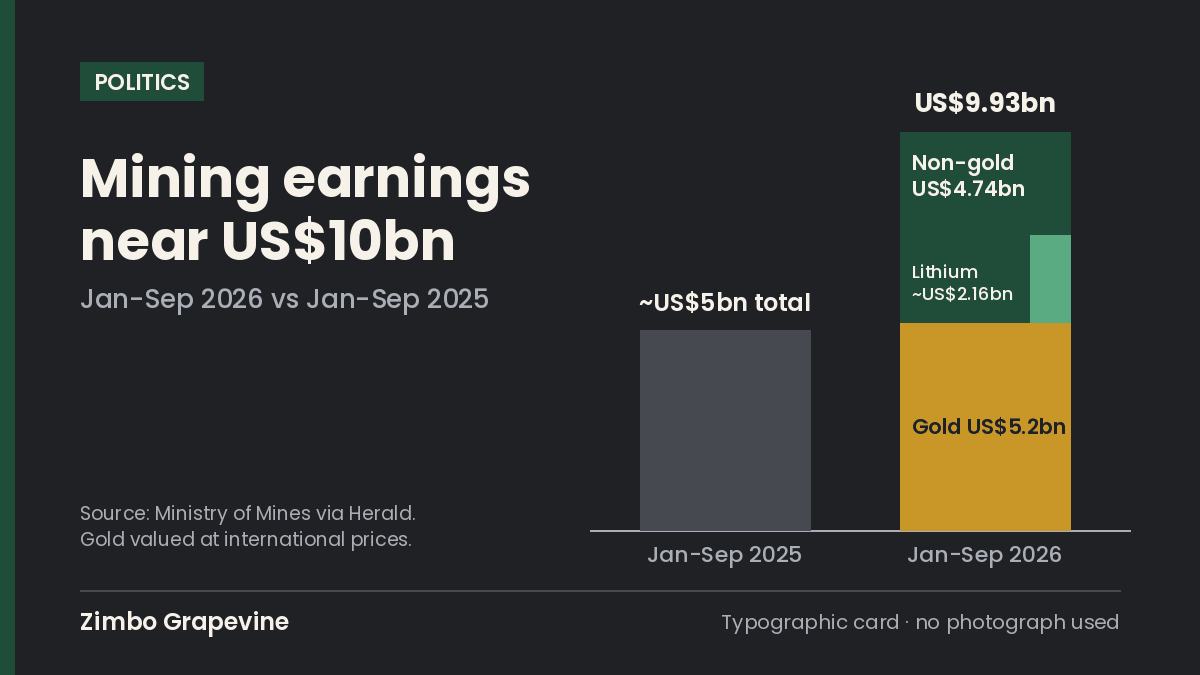
Zimbabwe's mining sector earned an estimated US$9.93 billion from mineral sales and gold deliveries in the first nine months of 2026. That is roughly double the US$5 billion recorded in the same period last year, according to figures from the Ministry of Mines and Mining Development reported by the Herald.
The figures also show a shift in what the country digs up and sells. Lithium has overtaken platinum group metals (PGMs) as the biggest earner among non-gold minerals, bne IntelliNews, NewZimbabwe and Mining Zimbabwe reported.
The breakdown
According to the ministry figures:
Non-gold mineral sales reached US$4.735 billion by 30 September, according to the Minerals Marketing Corporation of Zimbabwe (MMCZ), the state body that markets most minerals other than gold.
Gold delivered to Fidelity Gold Refinery, the state-owned buyer, between January and September was worth about US$5.2 billion at current international prices.
bne IntelliNews reported that non-gold mineral export earnings had more than doubled, with lithium now ahead of PGMs.
Why the jump?
Officials point to firm prices for gold, PGMs and lithium, and to new projects coming on stream. Mines and Mining Development Minister Polite Kambamura credited sound policies implemented by President Emmerson Mnangagwa and firmer metal prices, the Herald reported.
Gold has been a big part of the story. International gold prices have been at historically high levels, which raises the value of every ounce delivered to Fidelity.
Lithium output has also grown sharply. Chinese-owned mines and processing plants have expanded, including Huayou's Arcadia operation and its new lithium sulphate plant. Mining Zimbabwe linked part of the rise in MMCZ sales to beneficiation, that is, more processing in the country before export.
Targets for the year
Kambamura said the ministry's export revenue target for this year was "north of US$11 billion".
Chamber of Mines of Zimbabwe chief executive Isaac Kwesu said the industry was aiming for more than US$10 billion in mineral revenue this year.
"We are targeting annual mineral revenue in excess of US$10 billion this year, which by far and large is attainable looking at what is already happening on the ground," he said, according to the Herald. "Last year, we were at US$8 billion and US$10 billion is a good number."
Economist Professor Gift Mugano told the Herald total foreign currency receipts had reached US$15.9 billion by the end of September, and that more than 60 percent came from mineral exports. "Overall, we will exceed US$20 billion total foreign currency receipts by the end of the year," he said.
The caveats
These are official and industry figures, and Zimbabwe Grapevine has not audited them. The gold figure is a valuation at international prices of the gold delivered, not cash received by the state. Mining revenue also does not translate directly into government income or household earnings. How much reaches the Treasury depends on royalties and taxes, and some lithium producers are currently disputing their tax treatment.
The figures also show how heavily the economy depends on commodity prices. A fall in gold or lithium prices would hit export earnings quickly.
What's next
The planned ban on lithium concentrate exports from January 2027 is designed to push miners to process more in the country. Analysts will be watching whether that raises earnings per tonne or slows export volumes while new plants are built. Full-year mining figures are expected early in 2027.
Sources: Herald, 13 Oct 2026: https://www.heraldonline.co.zw/zim-mining-revenue-hits-us993bn/ · bne IntelliNews, 8 Oct 2026: https://www.intellinews.com/zimbabwe-s-non-gold-mineral-export-earnings-double-to-4-74bn-as-lithium-overtakes-pgms-474494/ · NewZimbabwe, Oct 2026: https://www.newzimbabwe.com/mineral-exports-surge-to-us4-7bn-as-lithium-takes-lead/ · Mining Zimbabwe, Oct 2026: https://miningzimbabwe.com/lithium-overtakes-pgms-in-zim-as-beneficiation-drives-mmcz-sales-to-us4-74bn/



Comments
Comments are moderated before they appear. Please read our comments policy.
Loading comments…